
研究
身体・材料・環境の相互作用を通じて、生物の適応性と自律性を理解し、新しいロボット技術を探究します。研究プロジェクト、これまでの成果、モデルや実験データを紹介します。
研究記録・アーカイブの詳細は英語原文で掲載しています。
研究概要
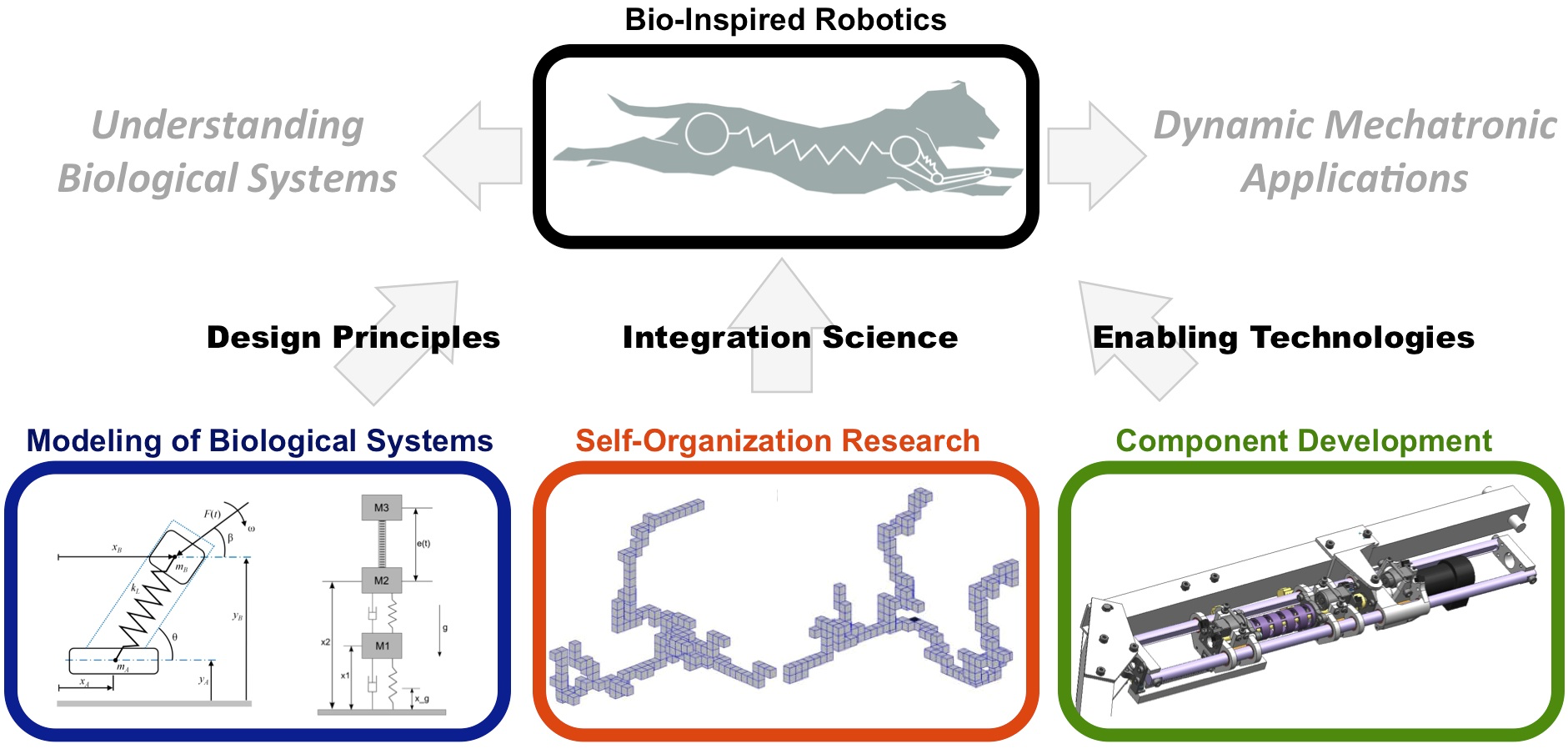
The research interests of the Bio-Inspired Robotics Lab lie at the intersection of robotics and biology. Through abstraction of the design principles of biological systems, we develop core competences which are the design and control of dynamic mechatronic systems, bionic sensor and actuator technologies, and computational optimization techniques. Our main goals are to contribute to a deeper understanding of adaptivity and autonomy of animals through the investigation of dynamic robots, and to engineer novel robotic applications which are more adaptive, maneuverable, resilient, and energy efficient.Currently our research focus is centered around “modeling of biological systems” (mathematical formulations of animals’ adaptive behaviors), “self-organization” (mechanisms to generate structures and patterns), and “component development” (development of unconventional enabling technologies such as sensors, motors, computation algorithms and assembling technologies).
研究プロジェクト
電気インピーダンストモグラフィ(EIT)によるロボットセンシング
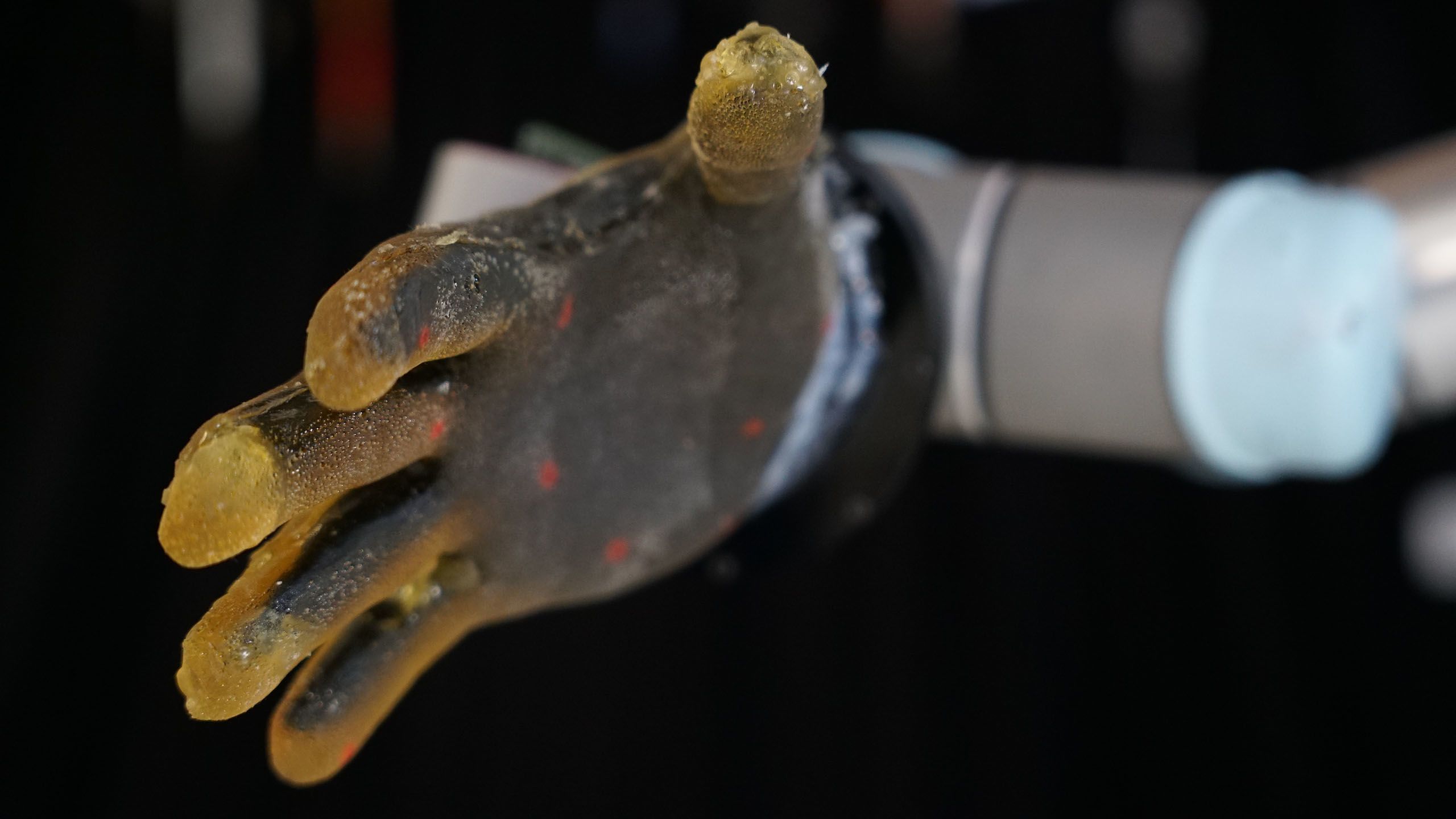
概要:電気計測を用いてソフトロボットに触覚を与える研究に取り組んでいます。電気インピーダンストモグラフィ(EIT)は、導電性材料の周囲に配置した電極から得られる測定値を使い、材料内部の変化を推定する技術です。柔軟な材料の設計とデータに基づく信号解釈を組み合わせ、感度の調整、接触位置の推定、複数の感覚情報の取得が可能なロボットスキンを開発します。
論文: Science Robotics, Scientific Reports
歩く魚に学ぶロボット
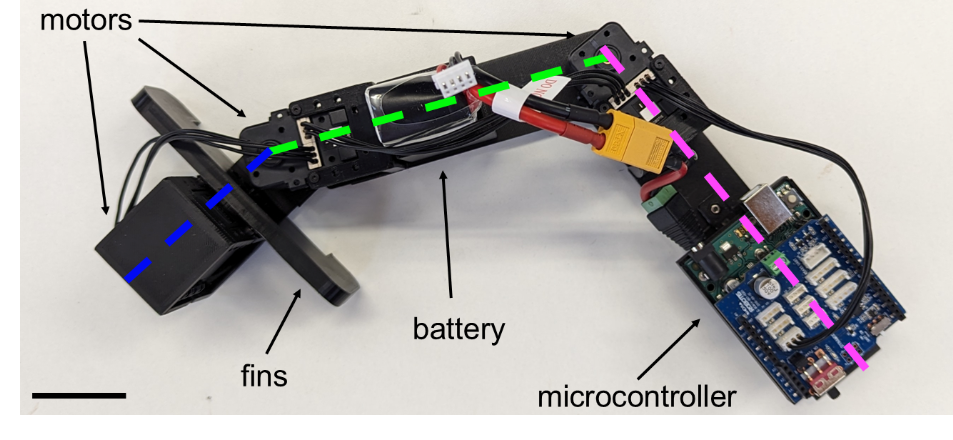
概要: 魚が陸上を歩く仕組みを理解するため、生物に学ぶロボットを開発しています。魚の歩行観察と数理モデル、シミュレーション、実機ロボットを組み合わせ、身体のうねりとひれの接地が前進運動を生み出す仕組みを調べます。三点支持を伴う歩行の簡略化モデルや、1台のモーターとらせん機構で動くロボットを通じて、単純な身体構造から協調した動きが生まれる原理を探究します。
研究者: Michael Ishida, Narges Khadem Hosseini, Fidji Berio, Theodora Po, Valentina Di Santo, Neil Shubin and Fumiya Iida
論文: Nature Communications, Bioinspiration & Biomimetics
プロジェクト: Walking Fish Robots
ロボット制御と身体性知能のためのリザバーコンピューティング
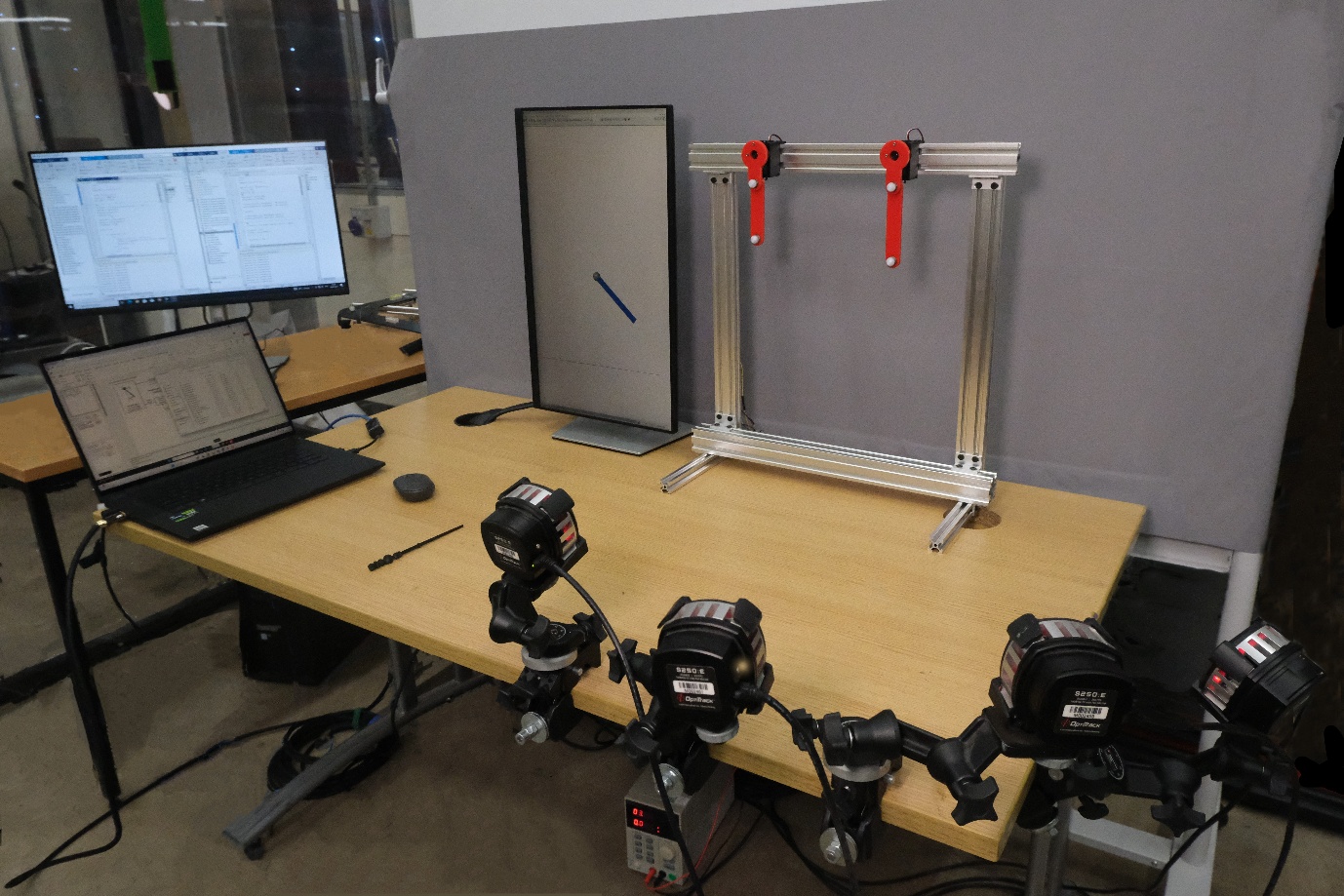
概要:相互に結合したシステムのダイナミクスを、学習やロボット制御に活用する方法を探究しています。リザバーコンピューティングは、動的システムで入力信号を変換し、学習した読み出し層から目的の出力を得る計算手法です。少量のデータによる劣駆動ロボットの制御、ロボットとリザバーの時間スケールの整合、移動する群れのネットワークを用いた計算を研究しています。
論文: Communications Engineering, IROS 2025, Neural Networks
食品を扱うヒューマノイドロボット
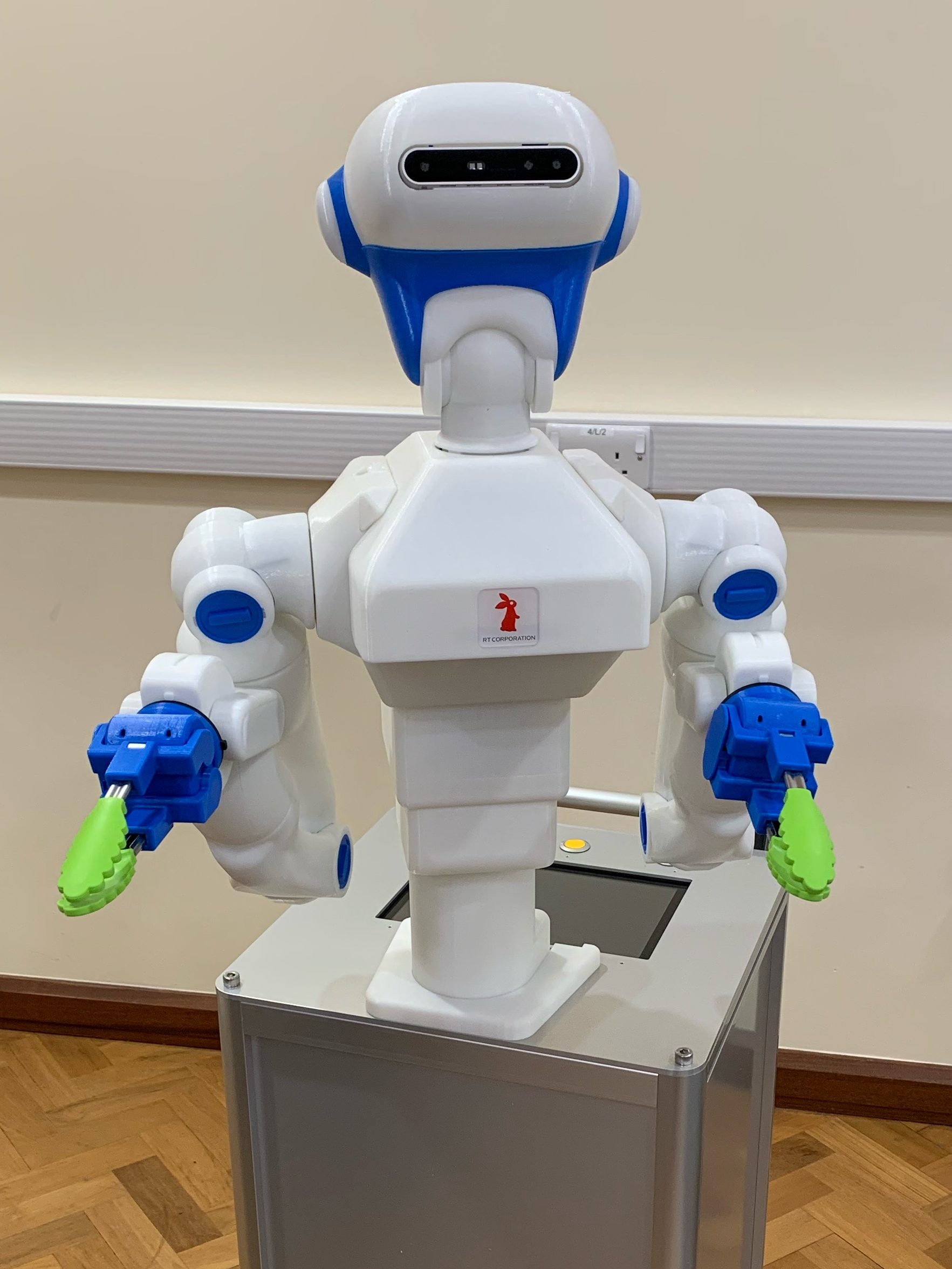
Foodly is an AI-powered robotics solution for food handling and processing. Using computer vision and deep learning , Foodly can adapt to many challenging and novel environments conventional industrial robots may be unable to. Foodly can work in both restaurants and industrial settings, showing the capabilities of AI-powered robotics in challenging and novel environments.
ロボット科学者:紙の落下実験
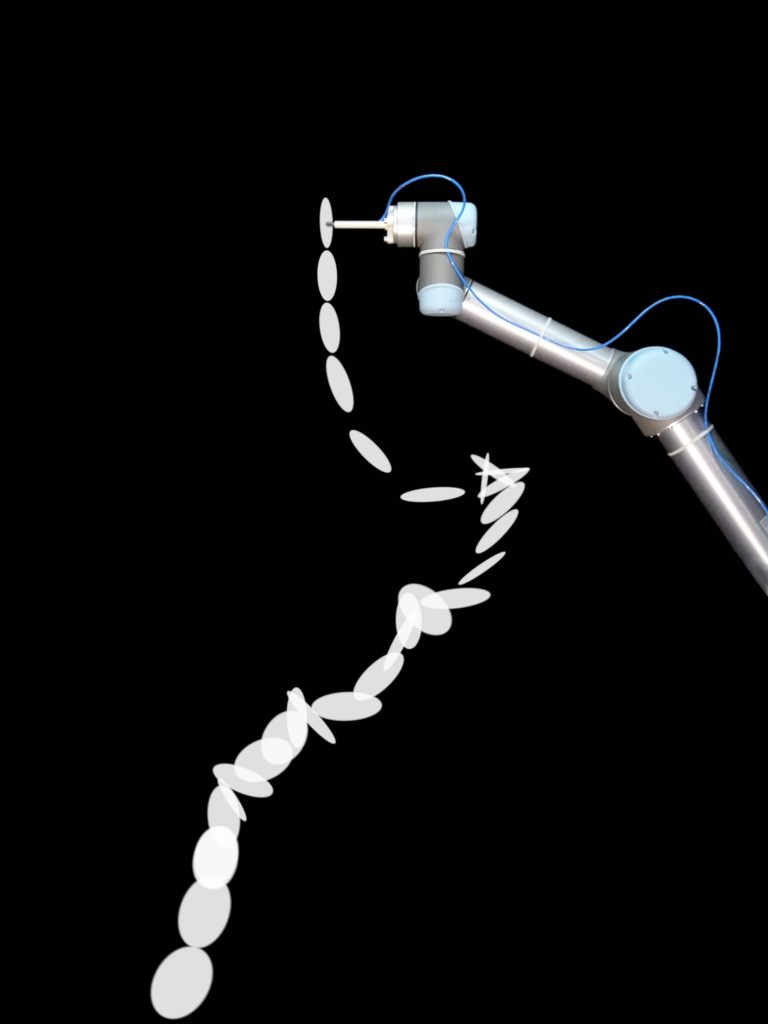
Description: Robotic system that is able to conduct large-scale physical experimentation of falling papers.
Researchers: Toby Howison, Josie Hughes, Simon Hauser
Publication: PLoS ONE, Nature Machine Intelligence
Video: Falling Papers, Experiments
農業・食品ロボティクス
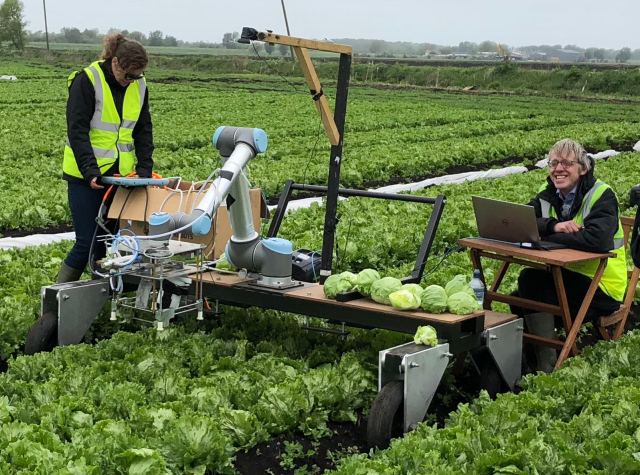
Description: This project explores the use of robotics technologies in agricultural industry, especially for unhealthy and tedious jobs for humans.
Researchers: Simon Birrell, Josie Hughes, Luca Scimeca
Publications: JFR, RAL
Video: Vegebot1, Vegebot2, LeafPeeling
人の手に学ぶロボットハンド
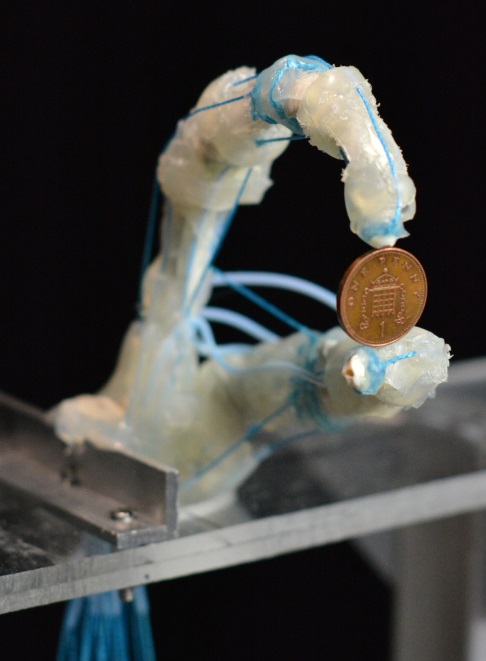
Description: Human-like dexterous manipulation is still a considerable challenge for robots. This project investigates bio-inspired musculoskeletal design of robotic hands to understand human hand manipulation as well as to design and control of robot hands.
Researchers: Utku Culha, Josie Hughes, Kieran Gilday
Publications: BioBio, Science Robotics
Video: UtkuHand, PianoHand1, PianoHand2
ソフトロボットのセンシング
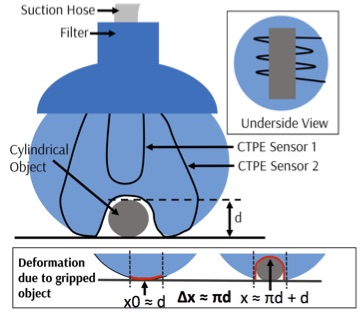
Description: Sensing of large deformable bodies plays a crucial role in soft robotics. This project explores functional materials, material fabrication and implementation to improve soft robot control.
Researchers: Utku Culha, Surya Nurzaman, Josie Hughes, Thomas George Thuruthel
Publications:SoRo, Sensors, PLoS One
Video: SVAS3, SensorisedUniversalGripper, AdaptiveSensorMorphology
これまでの研究プロジェクト
Physical Robot Evolution
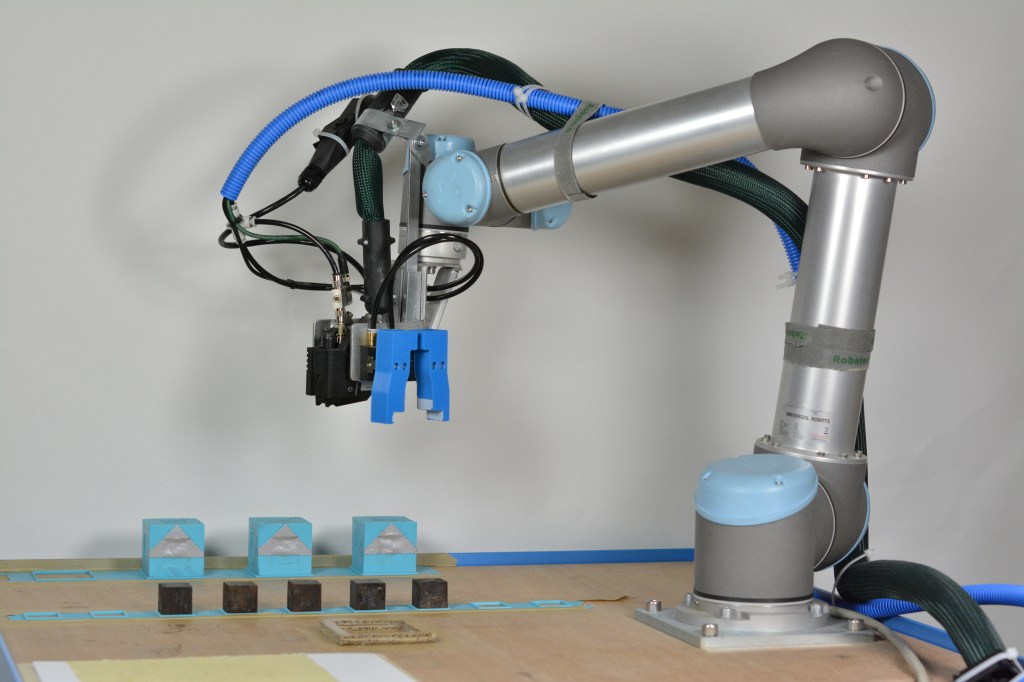
Description: While mechanical changes are common in biological systems (e.g. via growth and evolution), conventional robots are not able to change their bodies once built. This project explores autonomous design and fabrication technologies such that robots can adaptively vary their own mechanical bodies for better functionalities in complex tasks and environments.
Researchers: Luzius Brodbeck, Liyu Wang, Vuk Vujovic, Andre Rosendo, Toby Howison
Publications:PLoS One, ALife, RoySocInterface
Video: RobotInventor, RobotInventor2, EvoDevoExperiments, ToolBuildingAndUse
Amazon Robotics Challenge: CambridgeARM Project
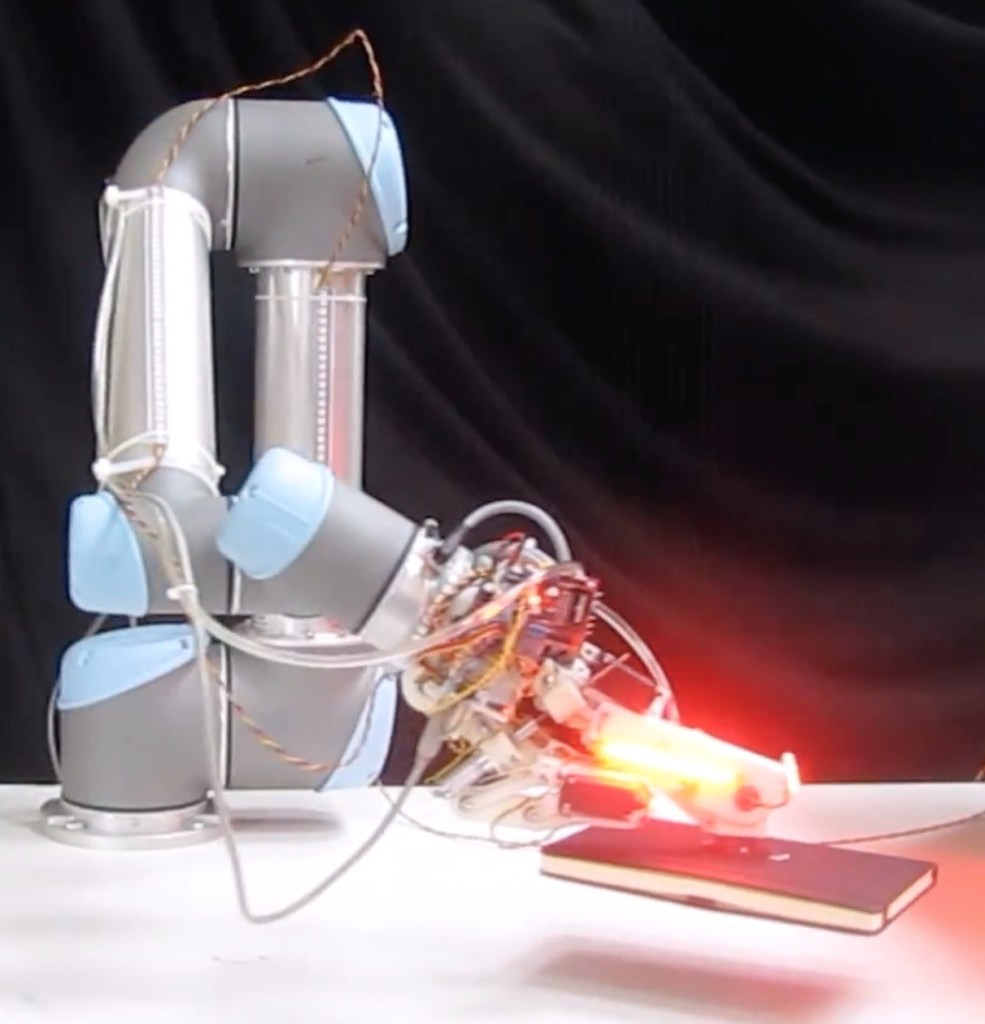
Picking and place into boxes from shelving remains one of the key challenges in a warehouse environment. As a driver for research, we are competing on the Amazon Robotics Challenge focusing on the development of robust vision systems, determing relevant gripping points and developing an adgile manipulator to allow manipulation of a number of items. More information can be found here.
Thermoplastic Adhesives for Robots
Description: Robotic growth and morphological change will increase the adaptability of a robotic system facing unanticipated task-environments. The research area focuses on development of mechanisms for robotic growth and morphological change based on Thermoplastic Adhesives (TPAs), also known as ‘hot glue’. TPAs are economic, off-the-shelf, and they have several interesting properties. They can form flexible or rigid structures by means of existing fast-prototyping techniques and can be also used as an easy and strong connection mechanism, which are important technologies towards robotic growth and morphological change.
Researchers: Liyu Wang, Luzius Brodbeck, Derek Leach, Utku Culha, Surya G. Nurzaman, Keith Gunura
Publications:IROS 2013, IEEE/ASME-TMECH, BioRob 2012, ICRA 2012, IROS 2012, PLOS ONE
Media coverage:Daily Mail, NBC News, Popular Science, New Scientist, RSI Channel, IEEE Spectrum, ETH Globe Magazine
Videos: SpiderRobot, SoftRobotGluing
Emergence of Reflexive Behavior
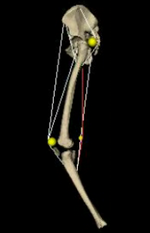
Description: Developmental robotics is located at the intersection of developmental sciences and robotics. The main goal of this field of research is to investigate how a creature can develop increasingly complex behaviors autonomously. In this particular project we use self-organization principles to develop reflexive behavior in a simulated leg model. Using the same self-organization principles, we have obtained analogues of the myotatic, the reverse myotatic, the reciprocal inhibition, and the withdrawal reflexes, which have been identified in the mammal spinal chord.
Researchers:Hugo Gravato Marques
Publications:Current Biology, Biological Cybernetics
Videos:Reflex Learning and Jumping
Unconventional Clutch-Based Actuators
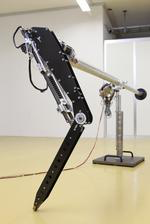
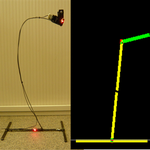
Description: Variable stiffness and damping mechanisms can increase versatility and efficiency of legged locomotion. This research area focuses on the development of lightweight, powerful and simple variable actuators. A number of different methods and materials are explored in the development process of legged robots such as carbon fibers and glass fibers for springs, variable stiffness mechanisms, non-linear springs and passive mechanisms as well as brakes and clutches to create multi modal actuators.
Researchers:Fabian Günther, Derek Leach
Publications: IROS 2013, IEEE/ASME-TMECH, IROS 2012, IROS 2012, AMAM 2011
Videos:Preloaded Hopping with ETHop and LMMA, Open loop Hopping with ETHop, Double Pendulum
Energy Efficient Legged Locomotion Based on Parallel Elastic Mechanisms
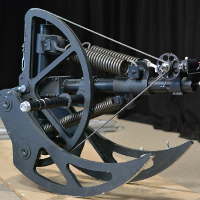
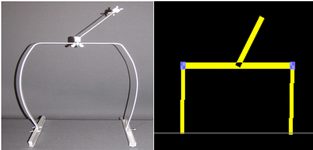
Description: During free vibration process, potential and kinetic energy are exchanged without energy loss. Based on this property, this project aims to design robots with energetically efficient locomotion. The elastic curved beam is demonstrated to perform well using free vibration in the experiment. Due to different design of structure, multiple locomotion gaits including hopping, walking and running, can be achieved. Furthermore, a number of models and simulation are used to investigate the dynamics of robot, which supplies the theory to explore optimal control methods.
Researchers:Xiaoxiang Yu, Fabian Günther, Surya Nurzaman
Publications:TMECH, ALife, TIE, ICRA 2013, IROS 2012, AIM 2012, AIM 2011, AMC 2012, AMAM 2013, Dynamic Walking 2012, ICMC 2011
Videos: Cargo, Kanga, Quad
Assistive Mechatronic Posture Support
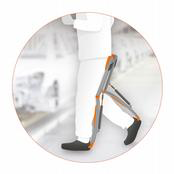
Description: Using passive and low energy components the goal of this project is to develop a power efficient and comfortable posture support device which allows the user to stand for long periods of time as well as walking and climbing stair. The device absorbs the body weight of the user and redirects it away from the knee. This reduces the stress on the knees and muscles and therefore the risk of pain and injuries. The device is equipped with a high performance variable hydraulic damper. The damping can be varied from very low to very high damping and ultimately brake. The control of this damper allows different applications of the device in the industrial, rehabilitation and medical field.
Researchers:Bryan Anastasiades, Keith Gunura
Publications: Patent
Large-Payload Climbing Robots for Complex Vertical Environments
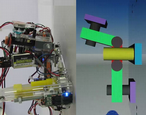
Description: Robotic climbing in complex vertical environments has been a challenge, especially when the irregularity in the environment is with a close dimension to a robot itself. The project proposed a robotic climbing technology based on thermoplastic adhesives, with whom a physical process of thermal bonding helps increase the adhesion strength, and whose rheological property enables conforming to large-scale irregularities in complex environments.
Researchers:Liyu Wang
BSc and MSc students: Lina Graber, Remo Bernet, Fabian Neuschaffer, Marc Osswald
Publications:IEEE-TRO, RAS, IROS 2011, ICRA 2012, IROS 2012;
Media coverage:New Scientist, UPI News, Discovery Channel, Focus Magazine, IEEE Spectrum
Videos:A flat surface, complex environments, a large payload
MR ESS (Energetically Self Sufficient)
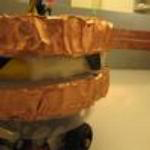
Description: Autonomous mobile robots must be able to deal with the various uncertainties that emerge from the interaction with the real world. Thus the estimation of unmeasurable state variables from measurable ones, is a required cognitive process that permits adaptive robots to successfully overcome the various challenging problems derived. This project aims at finding the binding between the physical and the mental simulation dynamics. Was named mental simulation the from us developed computational strategy.
Researchers:Liyu Wang,
BSc and MSc students: Kevin Frey, Rohit Vaish, Cristian Montillo
Media coverage:NZZ Campus Magazine
Videos:Q Learning
Compass Gait Robot Locomotion in Rough Terrain
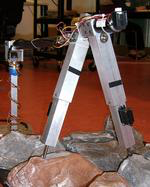
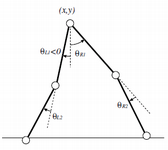
Description: The challenge of this project is to develop a controller with which the compass gait robot can walk through a series of steps and gaps on the ground.
(Massachusetts Institute of Technology, USA) Video
Underactuated Legged Robot Locomotion
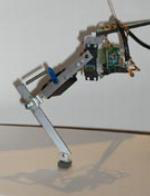
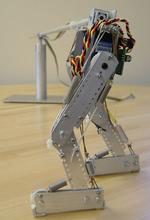
Human-like Biped Locomotion
Sensing through Body Dynamics
“Cheap” Underwater Locomotion
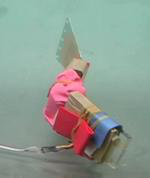
Description: Material properties of body influence significantly underwater for the purpose of locomotion. In this project, we investigate how much behavioral diversity can be achieved through the minimum control and actuation.
(University of Zurich, Switzerland) (Funded by the Swiss National Science Foundation, Grant No. 200021-109210/1)
Puppy: Cheap Rapid Legged Locomotion
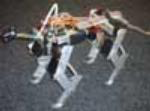
Description: This project investigates musculoskeletal models for rapid four-legged locomotion. The coordination of rigid and elastic structures results in a form of running behavior with simple control architecture.
(University of Zurich, Switzerland) (Funded by the Swiss National Science Foundation, Grant No. 200021-109210/1)
Stumpy: Pendulum Driven Hopping Machines
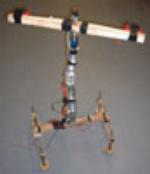
Biological Inspired 3D visual Navigation
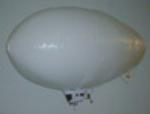
Description: Bees have sophisticated visual sensory systems for the purpose of navigation. By using an omni-directional vision which reproduces the perspective of animals, we attempt to model the cognitive function which enables the learning process of navigation.
(University of Zurich, Switzerland) (Funded by the Swiss National Science Foundation, Grant No 2000-061372.00)
Active non-verbal Interaction of Face Robot
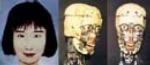
Description: Face
Robot is capable of exhibiting a variety of facial expression by using
the artificial muscles. We investigate how the non-verbal communication
between human and machine can be possible through facial expression.
(Science University of Tokyo, Japan)
研究紹介・動画
“It’s still a long way to go before we’ll have robots that look, act and think like us, but what we do have are a lot of enabling technologies that will help us import some aspects of biology to the engineering world.”
Professor Fumiya iida, head of Bio-inspired robOtics laboratory
Cambridge researchers from the BIRL are studying the interaction between robots and humans – and teaching them how to do the very difficult things that we find easy.
The Bio-Inspired Laboratory research looks at how robotics can be improved by taking inspiration from nature, whether that’s learning about intelligence, or finding ways to improve robotic locomotion.
A robot requires between ten and 100 times more energy than an animal to do the same thing. Iida’s lab is filled with a wide array of hopping robots, which may take their inspiration from grasshoppers, humans or even dinosaurs.
One of his group’s developments, the ‘Chairless Chair’, is a wearable device that allows users to lock their knee joints and ‘sit’ anywhere, without the need for a chair.
(Video and text courtesy of the University of Cambridge Press office)
The goal of the €3 million Self-healing soft robot (SHERO) project, funded by the European Commission, is to create a next-generation robot made from self-healing materials (flexible plastics) that can detect damage, take the necessary steps to temporarily heal itself and then resume its work – all without the need for human interaction.
Led by the University of Brussels (VUB), the research consortium includes the Department of Engineering (University of Cambridge), École Supérieure de Physique et de Chimie Industrielles de la ville de Paris (ESPCI), Swiss Federal Laboratories for Materials Science and Technology (Empa), and the Dutch Polymer manufacturer SupraPolix.
As part of the SHERO project, the Cambridge team, led by Dr Fumiya Iida from the Department of Engineering are looking at integrating self-healing materials into soft robotic arms.
(Video courtesy of and copyrighted to VUB/Brubotics)
研究リソース
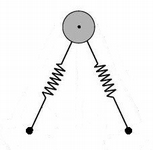
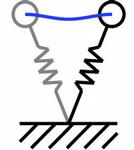
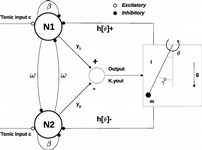
シミュレーションモデル
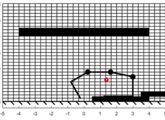
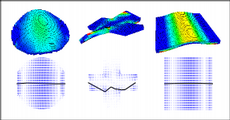
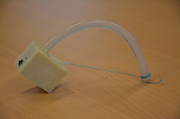
Download
実験データ
- Falling Paper Shapes: Detection and Classification (Toby Howison)
- Falling Paper Shapes: Experimental Data (Toby Howison)
- Dishwasher Unloading: Canteen Tray Data (Isobel Voysey)
- Teaching by OpenPose demonstration: Pancake cooking (Dylan Danno)
- Gaussian Process Inference Modelling of Dynamic RobotControl for Expressive Piano Playing (Cheryn Ng, Luca Scimeca)
- Joint Entropy-based Morphology Optimization of Soft Strain Sensor Networks for Functional Robustness (Thomas Thuruthel)